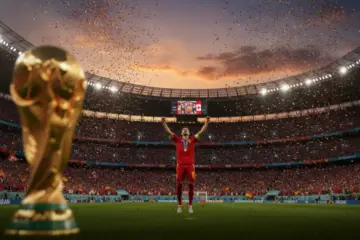

France’s manager Didier Deschamps has finalized his 26-man roster for the 2026 FIFA World Cup, making several high-profile decisions that have sent shockwaves through the football community. The selections reflect a strategic pivot toward form and current performance rather than reputation, with several established names finding themselves on the outside looking in as Les Bleus prepare for their journey to North America.
The Controversial Midfield Restructuring
Perhaps the most shocking omission centers on Real Madrid’s Eduardo Camavinga, whose absence marks a significant turning point in Deschamps’ selection philosophy. The young midfielder, who came off the bench during the 2022 final loss to Argentina, has struggled with consistency this season. Deschamps explained the reasoning with characteristic directness: “He had a difficult season where he played less. He also dealt with injuries. He’s a player who joined us very early, and he’s still young. With the choices I have to make, the balance of the squad across defenders, midfielders, and forwards has to be considered. I can imagine how disappointed he must be tonight.”
This decision underscores a broader approach to squad selection—immediate performance metrics now carry more weight than previous international success. The midfield core instead features:
- N’Golo Kanté – Experience and defensive solidity
- Aurélien Tchouaméni – Consistency at Real Madrid
- Adrien Rabiot – Veteran presence and versatility
- Manu Koné – Rising talent from Borussia Mönchengladbach
- Warren Zaïre-Emery – Youth and dynamism
Goalkeeping Changes and the Chevalier Situation
Lucas Chevalier’s exclusion represents another significant shift in France’s tactical setup. The Paris Saint-Germain goalkeeper lost his starting position to Matvei Safonov and has been absent from competitive play since January. Deschamps made his position clear: “Sporting performance is the main criterion. Lucas may be disappointed, but the fact is he hasn’t played for several months. When he had chances for game time, he didn’t take them.”
Replacing Chevalier in the goalkeeping rotation is Robin Risser, an emerging talent from Lens who earned his maiden international call-up following an exceptional domestic season. Risser, recently recognized as Ligue 1’s best shot-stopper, joins Mike Maignan and Brice Samba as France’s three goalkeeping options. His breakthrough campaign demonstrates Deschamps’ willingness to trust performers who deliver consistent results at the club level.
Attacking Arsenal: Depth and Firepower
While defensive and midfield selections generated debate, the forward line showcases the abundance of attacking talent at France’s disposal. The squad features one of the tournament’s most formidable attacking units, combining established stars with emerging talents. Kylian Mbappé leads the charge, supported by Ballon d’Or holder Ousmane Dembélé, whose consistency and technical excellence make him indispensable to the tactical framework.
The attacking contingent further includes:
| Player | Club | Role |
|---|---|---|
| Désiré Doué | AS Monaco | Winger/Forward |
| Michael Olise | Crystal Palace | Winger |
| Rayan Cherki | Olympique Lyonnais | Winger/Attacking Midfielder |
| Maghnes Akliouche | AS Monaco | Forward/Winger |
| Bradley Barcola | Paris Saint-Germain | Winger/Forward |
| Jean-Philippe Mateta | Crystal Palace | Forward |
| Marcus Thuram | Inter Milan | Forward |
Jean-Philippe Mateta’s selection over Randal Kolo Muani reflects Deschamps’ emphasis on current form and consistency. Muani, who dramatically influenced the 2022 World Cup campaign by scoring against Morocco and nearly securing victory in the final, finds himself excluded despite his previous tournament experience. This decision highlights how dramatically squad priorities can shift between tournament cycles.
Notable Absences and Final Squad Composition
Beyond Camavinga, Chevalier, and Muani, Lens winger Florian Thauvin also missed selection despite being nominated for Ligue 1’s Player of the Season. These omissions reflect Deschamps’ conviction that the selected 26 players provide the optimal balance for competing in North America.
The defensive structure remains strong, with established figures like Jules Koundé, William Saliba, and Ibrahima Konaté forming a protective backbone. The Hernández brothers—Lucas and Theo—provide additional defensive coverage alongside emerging talents like Maxence Lacroix and Dayot Upamecano.
Deschamps’ Legacy and Transition
This tournament represents Deschamps’ final assignment as France manager, concluding a tenure that began in 2012 and delivered the 2018 World Cup championship alongside the 2022 runner-up finish. His methodical approach to squad selection for this final tournament emphasizes merit and measurable performance over historical achievement or potential.
The broader football world anticipates Zinedine Zidane’s appointment as successor, though the former Real Madrid manager has remained outside the dugout following his previous role. Zidane brings extensive tournament experience and a proven record of success at club level, having won three Champions League titles and two La Liga championships at the Bernabéu.
Group Stage Outlook and Tournament Structure
France has been drawn into Group I alongside Senegal, Iraq, and Norway. The group composition presents a clear pathway through the initial stages, though Deschamps has emphasized the importance of maintaining balance and humility. His philosophy regarding tournament expectations remains measured: “I have ambition, and I want the players to share it. But we can’t lose our humility. I’m not going to pretend we’re not among the teams capable of becoming world champions. But there are eight, maybe ten teams who can say the same. You don’t win it by shouting that you’re the strongest.”
This measured approach, combined with a squad selected primarily on current merit rather than reputation, positions France as a serious contender without the complacency that sometimes affects defending champions and tournament favorites. The competition will ultimately judge whether Deschamps’ strategic restructuring represents wisdom or a missed opportunity in his farewell appearance.