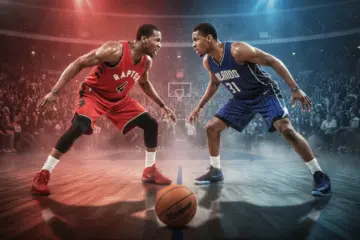

The Toronto Raptors open the 2026–27 NBA season at home against the Chicago Bulls on Wednesday, October 21. Tipoff is scheduled for 7:30 p.m. ET at Scotiabank Arena, where Toronto will begin a new campaign with a familiar superstar, rising young talent, and significantly higher expectations.
Kawhi Leonard’s return gives the Raptors an experienced two-way centerpiece, while Scottie Barnes remains the player most closely tied to the organization’s long-term direction. Chicago, meanwhile, arrives with a younger roster and an opportunity to test its developing identity against a team expected to compete near the top half of the Eastern Conference.
Why This Season Opener Matters for Toronto
Opening night will offer more than the first result in the standings. It will reveal how Toronto’s new pieces function together in a meaningful game and whether the team can immediately translate its defensive potential into consistent execution.
The Raptors finished among the NBA’s top five teams in defensive rating last season, and Leonard adds another elite perimeter defender to a group that already includes Barnes. That combination could make Toronto difficult to attack, particularly if the Raptors force opponents into rushed decisions and contested shots.
The game also marks the beginning of a larger test. Toronto reached the playoffs last season and pushed Cleveland to seven games, but a strong regular-season record will not matter unless the team builds reliable habits against both rebuilding opponents and established contenders.
Leonard’s Second Toronto Chapter
Leonard returns to the franchise as one of the most important players in Raptors history. He helped Toronto win its first championship in 2019 and delivered several memorable performances during that postseason, including the decisive corner shot that eliminated Philadelphia.
At 35, Leonard brings a skill set that remains valuable in virtually every situation. He can defend multiple positions, create his own shot, operate in the midrange, and slow the game down when possessions become difficult. His championship experience could also help younger teammates handle late-game pressure.
Health and workload management will shape the conversation around Leonard throughout the season. Toronto does not need him to carry every possession, but it does need him available for important stretches. His opening-night role against Chicago should show whether the Raptors plan to use him primarily as a scorer, a defensive stopper, or a flexible combination of both.
Barnes and Leonard Form Toronto’s Central Pair
Barnes remains essential even with Leonard back in the lineup. Last season, the versatile forward averaged 18.1 points, 7.5 rebounds, and 5.9 assists while continuing to influence the game as a defender, rebounder, and secondary playmaker.
His ability to move the ball and initiate offense should reduce the pressure on Leonard. Barnes can push the pace after defensive rebounds, attack mismatches, and create chances for teammates without needing to dominate the ball.
The partnership works in both directions. Leonard can draw defensive attention in isolation, allowing Barnes to attack open space, while Barnes’ size and passing can create cleaner opportunities for Leonard. Their defensive versatility may be even more significant than their scoring connection, since both players can switch assignments and disrupt opposing actions.
Toronto also has offensive support around them. RJ Barrett provides downhill scoring, Immanuel Quickley can organize the offense and stretch defenses, and Jakob Poeltl gives the Raptors a strong interior presence.
Chicago’s Young Roster Brings an Unpredictable Challenge
The Bulls enter the matchup from a different position. After missing the playoffs for four straight seasons, Chicago is focused on developing a younger core rather than relying on an established veteran foundation.
Josh Giddey, Matas Buzelis, and rookie Caleb Wilson are among the players expected to draw attention. Their growth will depend on improved defensive discipline, sharper half-court execution, and the ability to avoid empty possessions against Toronto’s pressure.
Young teams can create problems on opening night because their style is often difficult to predict. Chicago may use pace, quick decisions, and aggressive drives to challenge Toronto before the Raptors can organize their defense. If the Bulls generate transition chances, the game could become much more competitive than the talent gap suggests.
Toronto must also avoid treating the matchup as automatic. New lineups often produce uneven stretches, and Chicago will have every reason to play freely while searching for an early-season statement.
The Matchup’s Decisive Areas
Toronto’s Half-Court Defense
The Raptors should try to make Chicago work for every quality look. Leonard and Barnes can pressure ball handlers, switch across positions, and help cover mistakes when the Bulls reach the paint.
Keeping Chicago away from easy drives will be especially important. Forced jumpers and deflections could allow Toronto to turn defense into transition offense, where Barnes and Barrett can attack before the Bulls set their defense.
Rebounding and Interior Control
Possession battles may determine the game’s rhythm. Poeltl and Barnes will need to finish defensive possessions instead of allowing Chicago second chances, while Toronto’s wings must crash the glass when the matchup permits.
Strong rebounding would also help the Raptors control tempo. Defensive boards create opportunities to run, and offensive rebounds can compensate for stretches when Toronto’s perimeter shooting is inconsistent.
Quickley’s Control of the Offense
Quickley’s decision-making will be another factor to watch. Toronto needs him to manage the pace, find shooters, and deliver the ball to Leonard and Barnes in favorable positions.
If Chicago sends extra defenders toward Leonard, Quickley’s ability to punish those rotations could open the floor for Barrett and Toronto’s frontcourt players. Efficient ball movement would prevent the Bulls from turning the game into a series of isolated possessions.
Prediction: Toronto Has the Clearer Path to Victory
The Raptors enter as the more complete team. Home-court advantage, a stronger defensive foundation, and the presence of Leonard give Toronto several reasons for confidence. The team also has a clearer blend of veteran experience and developing talent.
Chicago’s young players could keep the game close if they run effectively and capitalize on turnovers. However, the Bulls face a difficult task against a Toronto lineup capable of defending multiple positions and producing offense from several creators.
The key question is whether Leonard and Barnes look comfortable sharing responsibility immediately. If they establish a smooth connection and Toronto protects the ball, the Raptors should have enough control to begin the season with a home win.
A High-Expectation Opening Night
For Toronto, this matchup represents the first public glimpse of a team with ambitions beyond simply returning to the postseason. Leonard brings championship credibility, Barnes supplies youthful versatility, and the surrounding roster offers enough scoring and defensive flexibility to support a serious Eastern Conference push.
The Bulls will be determined to show that their rebuilding process can produce immediate competitiveness. Still, Toronto owns the more favorable setup and has more proven answers across the court.
A victory would not settle every question surrounding the Raptors, but it would provide an encouraging first indication that Leonard, Barnes, and the rest of the roster can operate as a cohesive unit.