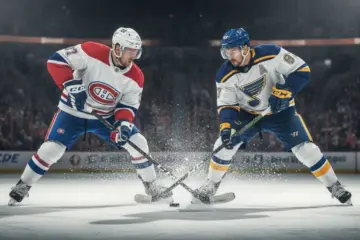

For more than 20 years, Sidney Crosby and Alex Ovechkin have provided the NHL with one of its most compelling individual rivalries. Their next meeting in Washington carries unusual emotional weight because Ovechkin has confirmed that the 2026–27 season will be his last in the league.
The Pittsburgh Penguins are visiting the Washington Capitals on Wednesday night, giving fans another chance to watch two defining stars share the ice. This time, however, the game feels less like a routine divisional matchup and more like an early moment in the farewell chapter of a historic era.
A Familiar Rivalry With a New Deadline
For most of Crosby and Ovechkin’s careers, another game was always waiting. If one matchup ended, there would be another regular-season meeting, another playoff possibility, or another season in which the rivalry could continue.
That assumption has changed. Ovechkin, who is 41 and playing his 22nd NHL season, announced that the current campaign will be his final year. He has scored 929 career goals and remains the league’s all-time leading goal scorer.
Every Penguins-Capitals game now carries an added question: how many more times will hockey fans see these two captains compete against each other?
Two Stars Who Shaped the Same Generation
Crosby and Ovechkin entered the NHL at nearly the same time and quickly became the central figures of a new hockey era. Washington selected Ovechkin first overall in 2004, while Pittsburgh chose Crosby with the top pick in 2005.
Their styles could hardly be more different. Crosby built his reputation through anticipation, puck control, passing and relentless work around the net. Ovechkin became famous for explosive skating, physical strength and a shot that opponents could identify but rarely contain.
That contrast made each meeting compelling. Crosby could dictate possession and create chances for an entire line, while Ovechkin could transform a game with one powerful release from the left side of the offensive zone.
By April 2026, the two had faced each other more than 100 times in the regular season and playoffs. Their rivalry endured because it was not limited to personal comparisons; it also produced championship stakes, memorable performances and years of debate about how greatness should be measured.
The Numbers Behind the Penguins-Capitals Story
The regular-season statistics favor Crosby. In 74 meetings, he has recorded 97 points, including 35 goals and 62 assists. Ovechkin has 70 points in those games, with 38 goals and 32 assists.
The postseason tells a slightly different story. Ovechkin has 33 points in 25 playoff games against Crosby, while Crosby has 30. Yet Pittsburgh won the first three playoff series between the teams, and the Penguins went on to capture the Stanley Cup in each of those seasons: 2009, 2016 and 2017.
Washington finally ended that pattern in 2018 by eliminating Pittsburgh in six games during the Eastern Conference Second Round. The Capitals then won their first Stanley Cup, with Ovechkin earning the Conn Smythe Trophy as the playoffs’ most valuable player.
The rivalry has therefore produced an unusual championship connection: every one of their four postseason series ended with the winning team eventually lifting the Cup.
The Game That Captured Their Competitive Fire
The 2009 Eastern Conference Semifinals supplied one of the clearest examples of their mutual influence. In Game 2, both players scored hat tricks, creating a dramatic individual duel inside a playoff game.
Washington won that contest 4–3, but Pittsburgh claimed the series in seven games and continued on to win the championship. The result reflected the larger pattern of their rivalry: one star could dominate a night, but the other was rarely far behind.
Those exchanges helped turn ordinary regular-season meetings into events. Fans were not simply watching two elite players compete; they were watching two different visions of offensive excellence answer each other shift after shift.
Why Canadian Fans Follow Crosby So Closely
Crosby’s importance extends beyond Pittsburgh. The Nova Scotia native has represented Canadian hockey for more than two decades and remains one of the country’s most recognizable athletes.
His overtime goal against the United States in the 2010 Olympic gold medal game in Vancouver is still one of the most celebrated moments in Canadian sports. That achievement gave Crosby an especially strong connection with Canadian viewers, who have followed his NHL career alongside his international success.
Ovechkin became the powerful international rival on the other side of the comparison. What began as a Canada-versus-Russia storyline gradually grew into a broader contest between two players attempting to define the same generation.
What Each Captain Can Still Bring
Sidney Crosby’s All-Around Influence
Crosby does not need to score to control a game. His ability to shield the puck, win battles near the crease, draw defenders and find passing lanes can affect nearly every Penguins possession.
His history against Washington also makes him an obvious player to watch. If Pittsburgh spends extended shifts in the offensive zone, Crosby’s patience and playmaking could determine whether pressure becomes a scoring chance.
Alex Ovechkin’s One-Swing Threat
Ovechkin remains one of hockey’s clearest finishing threats. Opponents know that Washington wants to create shooting opportunities for him, especially on the power play, but his timing and release continue to make that plan dangerous.
At this stage of his career, Ovechkin may not need to control every shift. One clean pass, one open lane and one shot from his preferred area could change the game immediately.
What to Watch as the Farewell Era Begins
- Possession against finishing: Crosby may influence long stretches through puck control, while Ovechkin can decide the outcome with a single scoring opportunity.
- Special teams: Washington’s ability to place Ovechkin in a power-play shooting position could be one of the night’s most important tactical details.
- The emotional atmosphere: With Ovechkin’s retirement now confirmed, every home appearance during his final season will carry more significance.
The standings and two points will still matter to both teams. Even so, the lasting memory of this meeting may have less to do with the early-season standings than with the knowledge that the number of Crosby-Ovechkin games is shrinking.
One More Meaningful Chapter
The NHL already has a new generation of stars, including Connor McDavid and Nathan MacKinnon. Those players will create rivalries of their own, but duplicating the Crosby-Ovechkin story will be difficult.
The pair arrived near the same time, became superstars almost immediately, met repeatedly in the postseason and remained relevant for more than two decades. Their careers overlapped long enough for fans to compare their skills, championships, records and personalities across an entire era.
Wednesday’s meeting in Washington is therefore more than another Penguins-Capitals game. It is another opportunity to watch two legendary careers intersect before one of the sport’s most recognizable rivalries moves permanently into history.