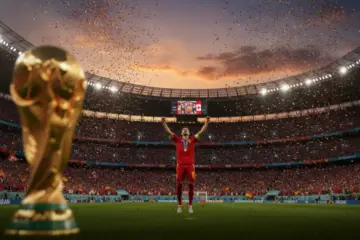

Belgium defeated Senegal 3-2 in extra time during the Round of 32 at the 2026 FIFA World Cup, staging one of the most dramatic comebacks in tournament history at Seattle Stadium on July 1, 2026.
For nearly 85 minutes, the match seemed destined for Senegal. The Lions of Teranga controlled proceedings, dominating possession and creating chances while Belgium looked disorganized and ineffective. With two goals already in and the clock ticking, the Belgian team appeared ready to exit the tournament in disappointment.
However, football delivered a script that defied all expectations. In the final five minutes of regular time, Belgium scored twice to force extra time. Then, in the dying moments of stoppage time during extra time, Youri Tielemans converted a penalty to seal a 3-2 victory and send Belgium to the Round of 16.
Senegal’s Dominant First Hour
Senegal opened the match with intensity and tactical precision. Under the guidance of coach Pape Thiaw, the Lions of Teranga executed a high-pressing system that overwhelmed Belgium’s midfield. The approach yielded results early in the game.
In the 25th minute, a cross from Sadio Mané found Ismaïla Sarr, whose header cannoned off the post. Habib Diarra capitalized on the rebound, slotting the ball home to make it 1-0. Diarra became the first Senegalese player to score in his first two World Cup starts, injecting confidence into the Senegalese side.
Just six minutes into the second half, Sarr doubled the lead. Moussa Niakhaté launched a long ball over Belgium’s defense, and Sarr controlled it perfectly between two defenders before unleashing a powerful strike into the top corner. The goal, his fourth of the tournament, equaled Roger Milla’s legendary record for the most goals by an African player in a single World Cup edition.
At 2-0, with little time remaining, Belgium seemed all but eliminated. The Seattle Stadium crowd, initially expecting a Belgian victory, watched in disbelief as Senegal looked set to cruise into the next round.
The Unbelievable Final Five Minutes
Belgium’s turnaround began in the 86th minute. Thomas Meunier, introduced as a substitute, delivered a precise cross from the right flank. Romelu Lukaku, who had entered the match at halftime as a desperate gamble, ghosted to the near post and swept the ball past goalkeeper Mory Diaw. The goal marked Lukaku’s 92nd international appearance and was Belgium’s first shot on target all game.
The momentum shifted instantly. Two minutes and 38 seconds later, Leandro Trossard clipped a cross from the left. Diaw rushed off his line, misjudging the ball’s flight, and was stranded. Tielemans, who had been arguing with teammates earlier in the match, rose highest and looped a header into the empty net to equalize at 2-2.
From a position of near-certainty of defeat, Belgium had pulled off one of the most remarkable comebacks in World Cup history. The comeback was the latest two-goal deficit overturn within regulation time in the tournament’s history.
The Penalty That Decided the Match
Extra time was tense and cautious, with neither side willing to overcommit. In the 117th minute, Dodi Lukébakio struck the crossbar, but play continued. However, the Video Assistant Referee (VAR) system reviewed the incident and spotted a foul earlier in the sequence.
Rewinding the footage, officials saw Lamine Camara sliding in on Tielemans at the edge of the box. Referee Saíd Martínez was called to the pitchside monitor. After seven agonizing minutes of review, the referee pointed to the spot, awarding Belgium a penalty in the final moments of stoppage time.
The decision echoed a painful memory for Senegal. Six months prior, during the Africa Cup of Nations final, Senegal had walked off the pitch in protest against a late penalty awarded to Morocco and were subsequently stripped of the title. This time, there was no walkout, but the fury among Senegalese players was palpable.
Pathé Ciss attempted to unsettle Tielemans with some gamesmanship near the penalty spot, but the Aston Villa midfielder remained composed. He placed the ball, waited for the whistle, and drove his shot into the top-right corner to seal the victory.
The goal was recorded at 124 minutes and 44 seconds, making it the latest winning goal ever scored in the 96-year history of the FIFA World Cup.
A Night of Historic Records
Belgium became the first team in World Cup history to recover from a two-goal deficit so late in regulation and win a knockout match. The feat also made Belgium the second nation, after West Germany, to overturn a two-goal knockout deficit at the World Cup twice, having previously done so against Japan in 2018.
Trossard’s assist for the equalizer was his 16th chance created at the 2026 World Cup, more than any other player in the tournament. Despite the heartbreak, Senegal achieved their own milestone by becoming the first African nation to score 10 goals in a single World Cup edition.
What Comes Next for Both Teams
Belgium advances to the Round of 16, where they will face the winner of the United States versus Bosnia and Herzegovina match. The victory came with immense psychological scars, as the team spent 85 minutes as their worst version before becoming immortal in the final five minutes.
For Senegal, the cruelty of the result is almost unbearable. They dominated the match, created superior chances, and scored two goals, yet still went home. Football does not care about fairness; it cares only for moments. And on July 1, 2026, the biggest moment belonged to Belgium.
Youri Tielemans, who had been screaming at teammates earlier in the match, scored the decisive penalty and completed a brace that will be etched into World Cup history for decades. The Red Devils march forward, while the Lions of Teranga must reflect on a performance that was magnificent, yet ultimately futile.