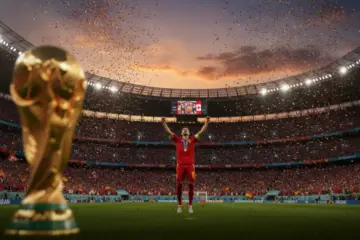

Senegal enters the 2026 World Cup conversation as more than a feel-good story. It is now a serious contender, built on confidence, talent, and a squad that believes it belongs among the best in the world.
Head coach Pape Thiaw captured that mood after a recent match when he said he would step aside if he ever doubted Senegal could win the tournament. The statement was bold, but it also reflected how far the program has come.
The team’s appeal is easy to see for fans and bettors watching the Senegal World Cup 2026 prospects, and Canadians can back that view on Rexbet Canada, where Senegal is being treated as a credible outsider rather than a long shot.

A Winning System Built at Home
Senegal produces elite players at a remarkable rate for a country of about 20 million people. Much of that success starts with academies such as Generation Foot, Diambars, and Dakar Sacre Coeur, which offer strong coaching, education, and medical support before exporting players to Europe.
The model works well for the national team, but it is far less kind to the local game. Many academies are tied to European clubs through long-term deals that give foreign sides first access to the best prospects.
- Generation Foot has worked closely with FC Metz for more than 20 years.
- That pipeline helped produce players such as Sadio Mane, Ismaila Sarr, and Pape Matar Sarr.
- Local academies often receive only a small share of the money generated later in Europe.
The gap is stark. In one review of 13 academy-trained players who reached Senegal’s continental squads, the local academies received only €100,000 in initial transfer fees, while the clubs that signed them later sold them for a combined €81.2 million. Over their careers, those 13 players generated more than €411 million in transfer value.
The imbalance also affects domestic football. Stadiums need work, the local league lacks reach, and clubs often struggle to recover solidarity payments that are supposed to be paid when major transfers happen abroad.
The Diaspora Edge
Senegal has also become more aggressive and more effective in recruiting dual-national players from Europe. The federation now moves early, targeting teenagers before they fully commit to another national team.
That strategy has paid off because it combines identity, opportunity, and timing. Players with Senegalese roots are being asked to join a side that is not just promising, but already winning.
- Ibrahim Mbaye, a teenage PSG forward, has been brought into the picture.
- Mamadou Sarr, a young Chelsea defender, has also chosen Senegal after youth appearances for France.
- The federation’s pitch blends family ties with the chance to play on a bigger stage.
This mix gives Senegal rare depth. A veteran such as Idrissa Gana Gueye can share the field with teenagers who are still taking their first steps in elite football.
Why 2026 Matters So Much
The next World Cup may be the final major tournament for Senegal’s defining stars. Sadio Mane, Kalidou Koulibaly, and Edouard Mendy are all part of a generation that has carried the country’s ambitions for years.
The group draw is demanding, and Senegal will not have the luxury of easing into the competition. France, Norway, and Iraq all pose different problems, and the opener against France in New Jersey will be an immediate test of whether Senegal can match its confidence with results.
If the Lions of Teranga advance, they will do so with a squad built for pressure: disciplined, physical, and deep enough to survive a long tournament. The bigger question is whether that success can be sustained at home, where the system still leaves many of its best foundations under strain.